
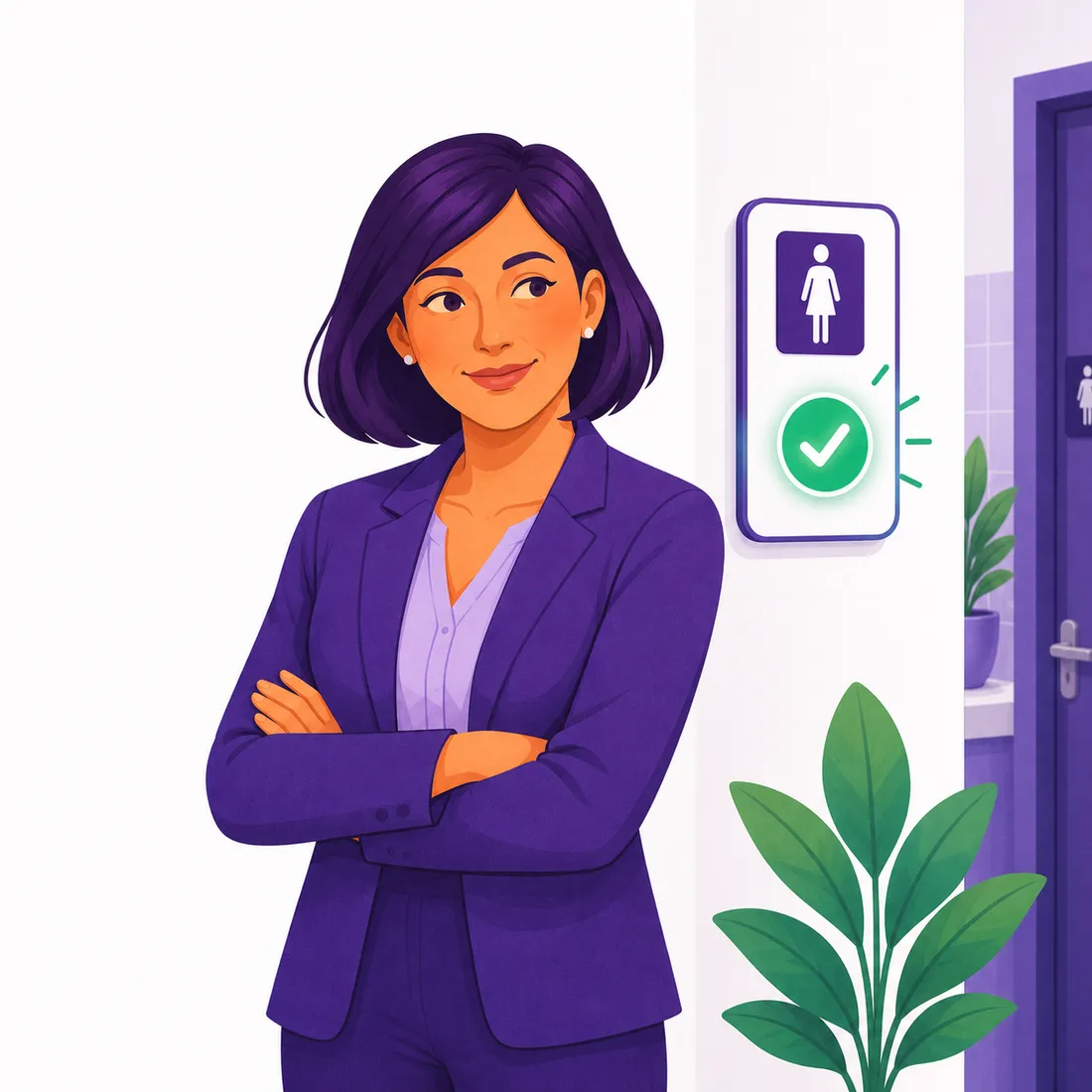
Meet Dana — she runs Environmental Services.
Dana keeps a 600-bed hospital clean: dozens of public restrooms across nine floors, three shifts, a team stretched thin.
She's good at her job. The problem isn't her team — it's how she finds out something's wrong.
Right now, a dirty restroom, empty paper towels, or a broken fixture reaches her through whatever channel the upset person happens to grab.

It's not information — it's noise.
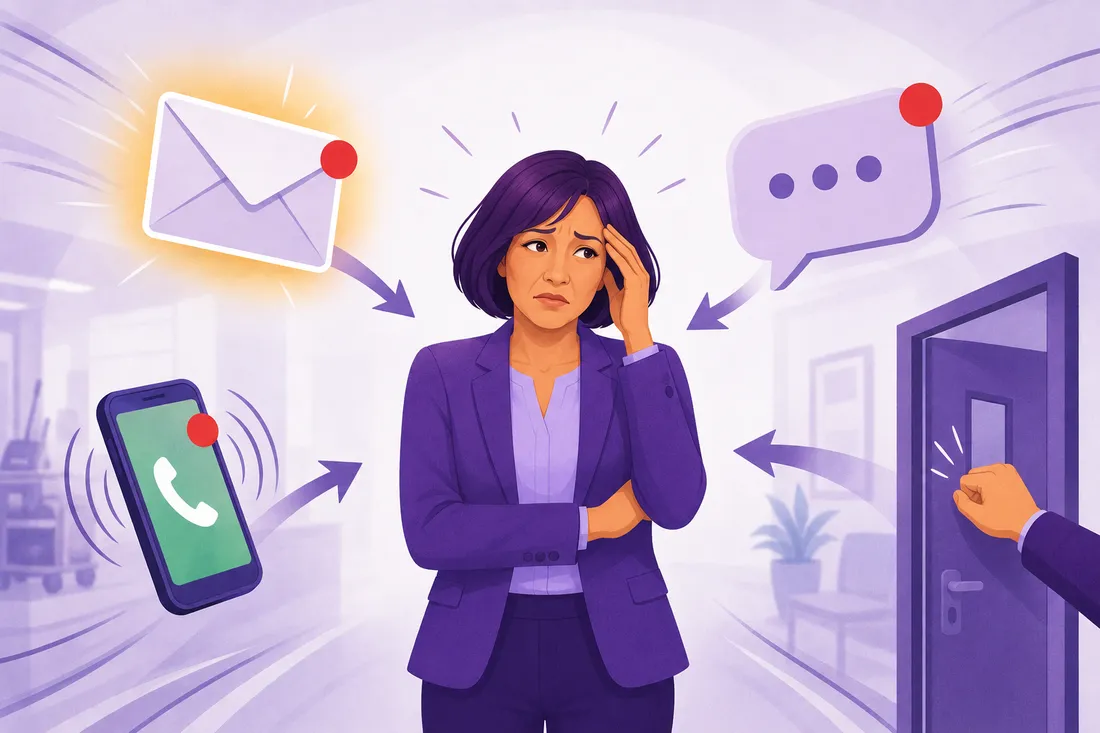
- No precise location. "Third floor" is six restrooms. Someone has to go find it.
- No timestamp, no severity. Urgent spill or low paper towels? Same panic.
- No record. No data to improve service.
- No coverage. Five loud complaints about one restroom — and silence about the others.
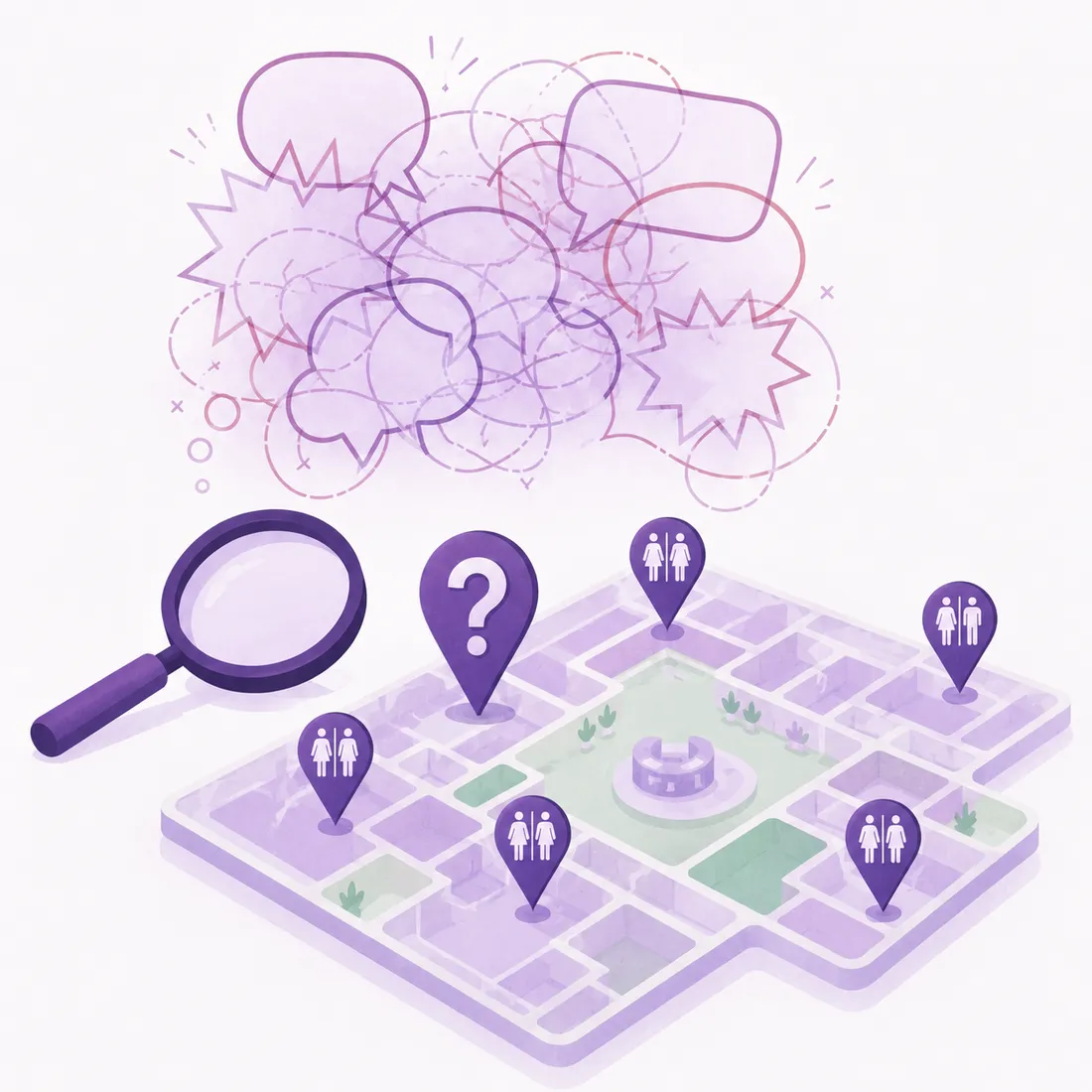
Every report costs Dana a phone call back, a walk-around, or a guess. The work starts before the cleaning does.
The worst restroom is the one nobody reports.
Most unhappy patients and visitors never complain. They just remember — and quietly decide your hospital cuts corners.
- They won't hunt down a staff member.
- They won't call a number on a sign.
- They will walk out with a worse impression — and tell others.
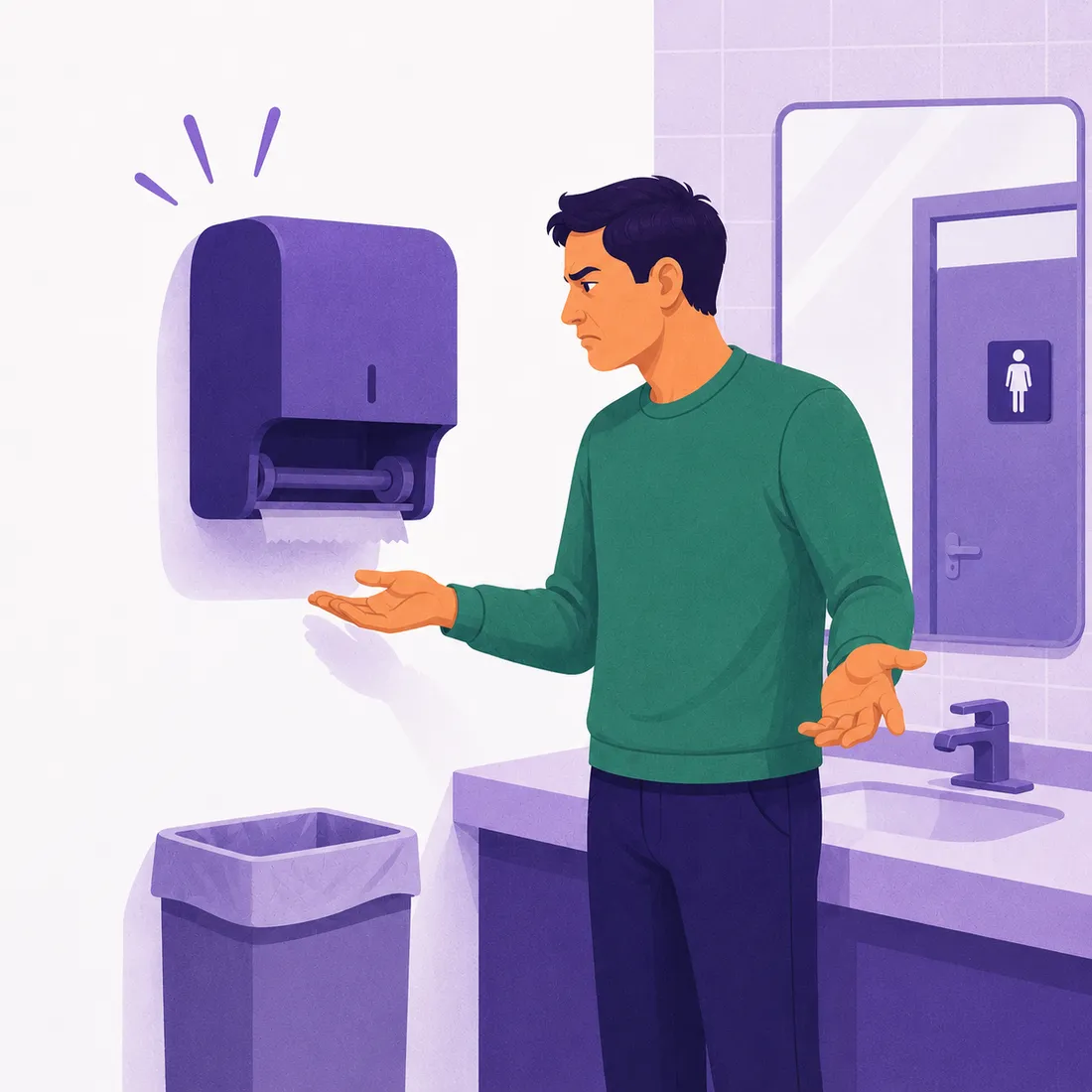
Dana's loudest restroom gets five complaints. Her worst one often gets none — it just quietly erodes trust.
Echo: the easy way to report a problem.
Scan the QR. Tap the problem. Done in under 10 seconds. No app. No login. No personal data.
- A small placard in every restroom carries a unique QR.
- The sign is encoded with exactly which restroom it is — floor, wing, fixture.
- One tap on the problem routes a clean, precise report straight to EVS.
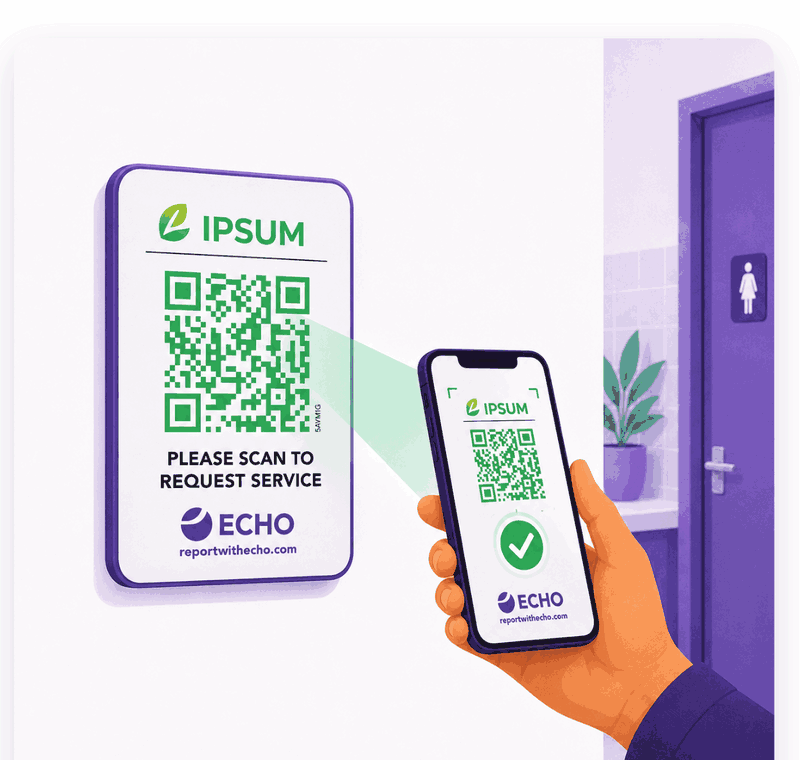
The bar to report drops to almost nothing — so the quiet problems finally surface.
How it works — easy as 1, 2, 3.
-
Scan
Any patient, visitor, or staff member scans the QR in the restroom. Opens in the browser — nothing to install.
Asset-anchored The QR self-identifies the exact restroom & fixture — no map, no guessing. -
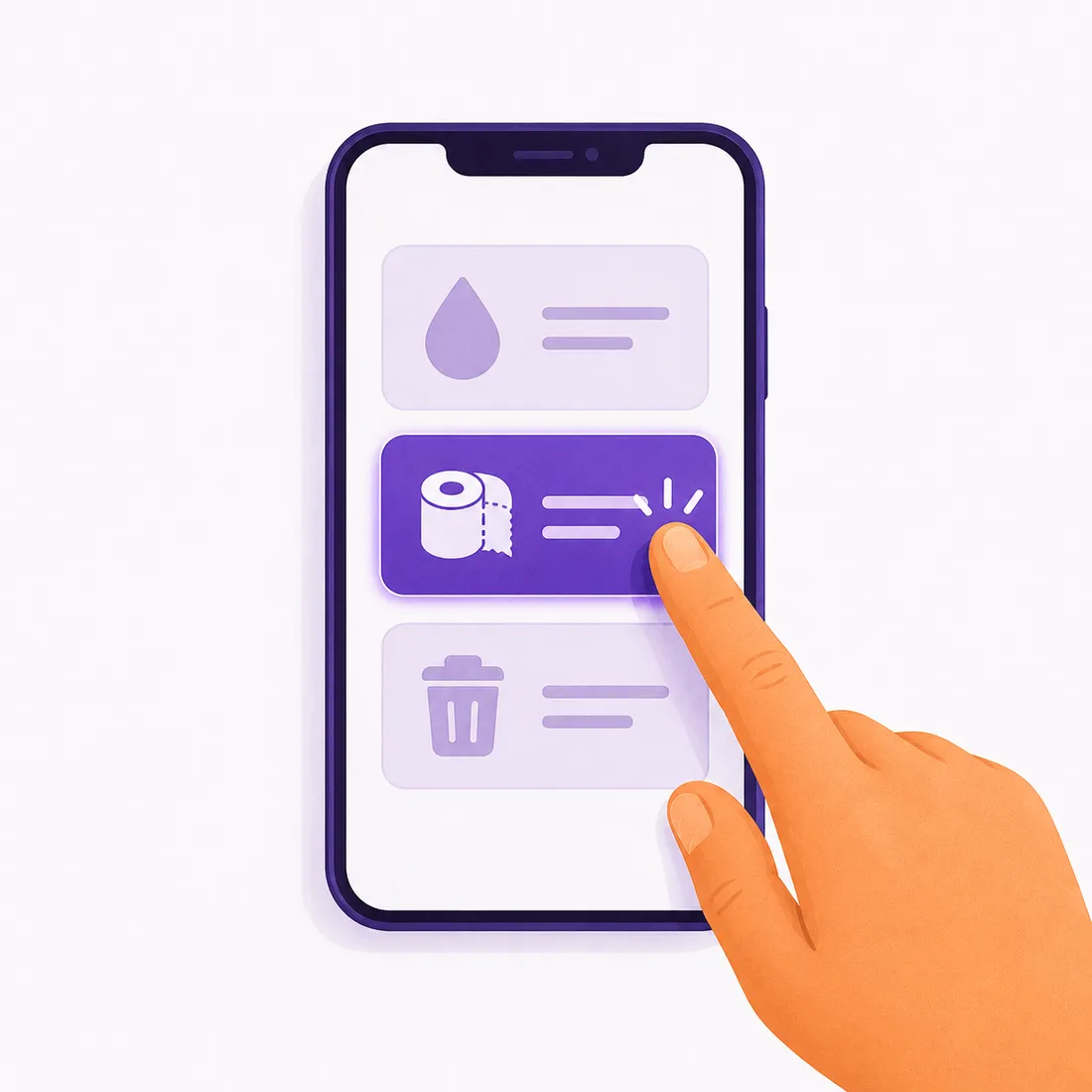
Tap the problem
"Out of supplies," "needs cleaning," "something's broken." One tap. No typing, no account.
Zero friction No app, no login, no personal data. The reason quiet problems finally get reported. -
Routed to EVS
An exact, time-stamped report lands in your team's queue — the right restroom, instantly.
Fits your workflow Routes into how your EVS team already works — not a second system to babysit.
Chaotic channels become one clean queue.

- Email, hours late
- Phone call to decode
- Text to a personal cell
- A knock on the door
Decode · guess · chase

- 3-West · out of paper towels
- ED waiting · needs cleaning
- Main lobby · fixture broken
Right info · right place · instant
One live queue — located, timed, resolved.
| Location | Problem | Reported | Status |
|---|---|---|---|
| 3-West · 3rd floor | Out of paper towels | 2 min ago | New |
| ED waiting · 1st floor | Needs cleaning | 6 min ago | Assigned |
| Main lobby · 1st floor | Fixture broken | 12 min ago | Assigned |
| 4-East · Oncology | Out of soap | 19 min ago | Resolved |
| Radiology · 2nd floor | Spill reported | 26 min ago | Resolved |
Illustrative dashboard — sample data for demonstration.
Built for how EVS actually works.
-
Precise
Asset-anchored
The exact restroom, every time. No "which floor?" No feedback box that could be anywhere.
-
Fast
≤10s to report
Low enough friction that quiet problems surface before they turn into complaints.
-
Provable
Full audit trail
Every report time-stamped and resolved on record — response time you can show.
-
Private
Anonymous · zero PII
No phone number, no account. Nothing to safeguard, nothing to deter the reporter.
Asset-anchored reporting is Echo's core differentiator — it pinpoints the exact restroom, where pin-drop, category, and SMS tools or generic feedback boxes can't.
Faster response changes the whole picture.
Catch the problem in seconds — and the effects compound into better experiences:
- Response time caught in seconds, located exactly
- Cleaner restrooms fewer bad moments for everyone
- Trust patients & visitors notice
-
Operational win
Less time decoding complaints & chasing locations — more time actually cleaning.
-
Experience win
The quiet majority who'd never complain finally have a 10-second voice.
-
Coverage win
You hear about the restrooms that used to stay silent — not just the loudest ones.
Directional — the lift depends on your traffic and current response times. We'll measure it together in the pilot.
We make it easy. Start with one floor.
-
A 90-day pilot on a handful of high-traffic restrooms.
-
We plug into your EVS workflow. No new system to babysit, no IT project.
-
You watch the live queue — volume, response times, the problems you weren't hearing about.
-
Then we review the numbers together — and decide on a full rollout.
One scan. The exact issue. Fixed faster — building better experiences, one restroom at a time.